
Flexifloor
Adventech is a Quebec construction company. Flexifloor is the direct-to-consumer brand it launched to sell the 5mm clipless vinyl plank its own crews had been installing on job sites for years.
Makro designed and built the Flexifloor storefront on Shopify. The catalog is priced by the pack and consumed by the square metre, so the experience is engineered around a single conversion: turning a room measurement into the correct order quantity, in English and French, for homeowners and contractors alike.

An Entry Point Built On Installed Rooms
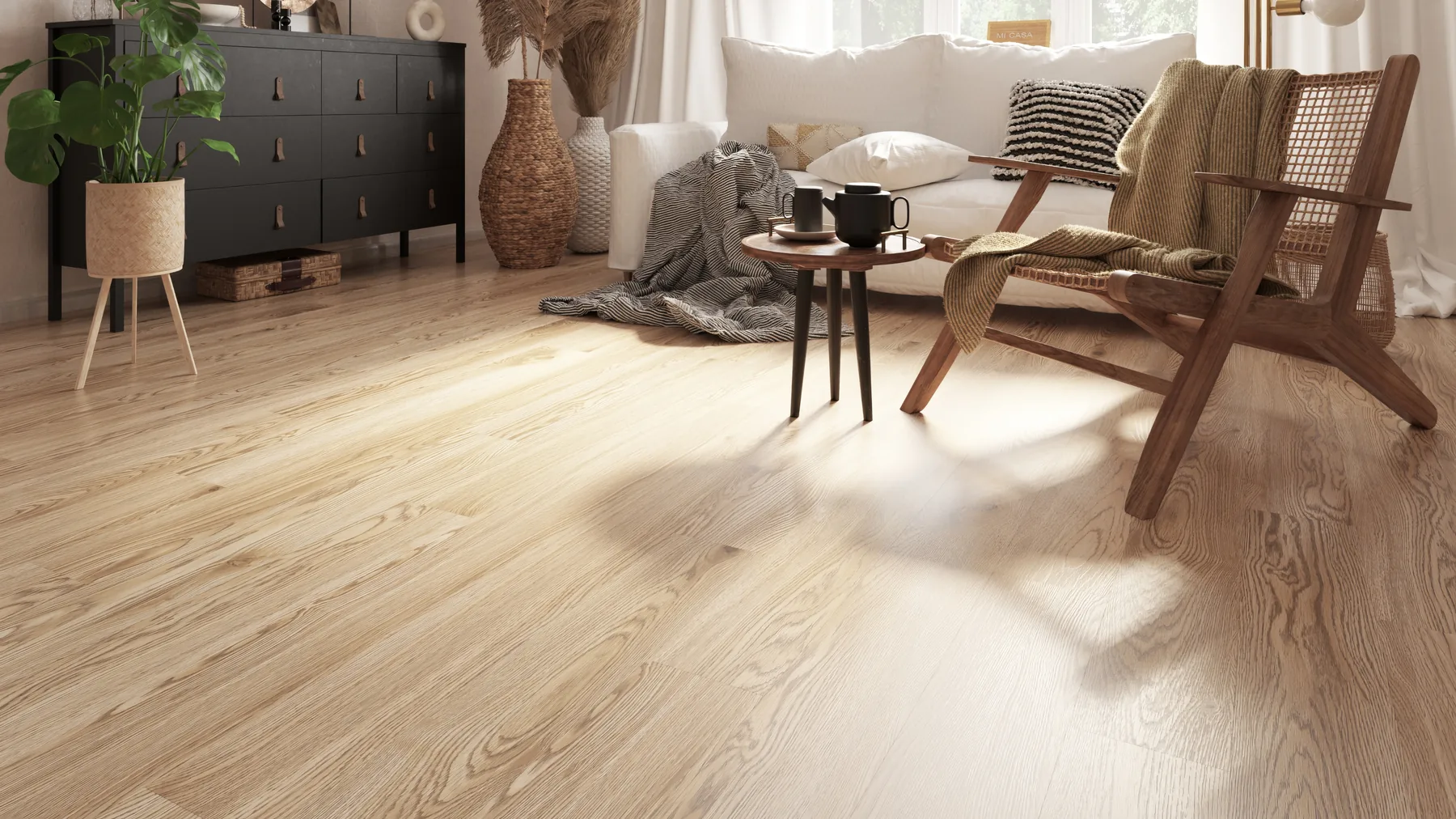
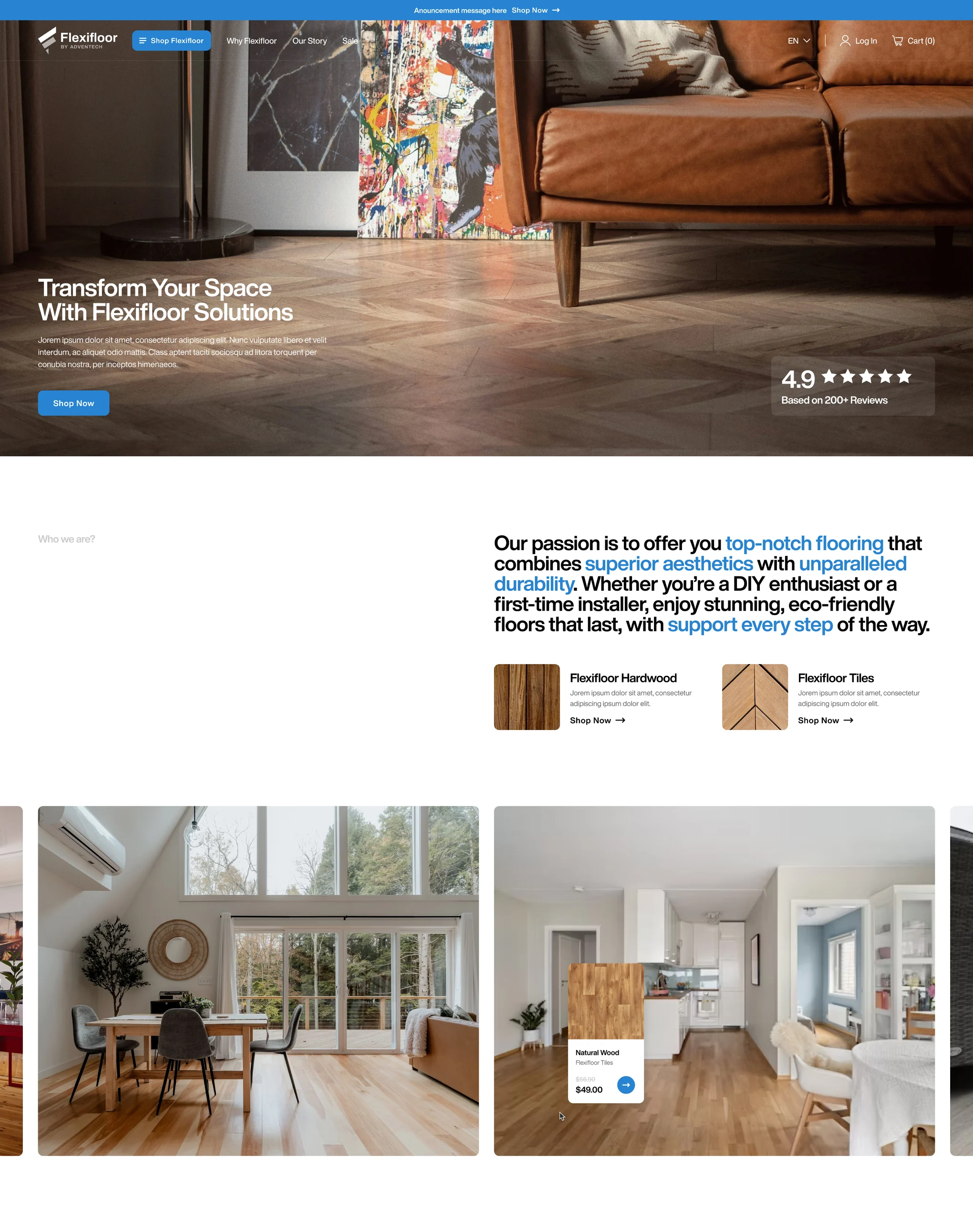
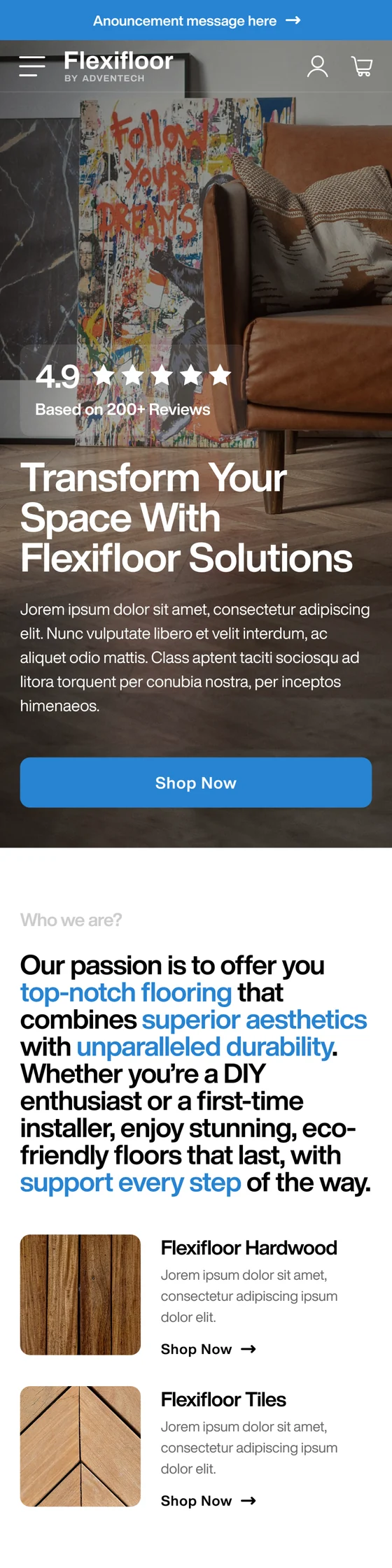
Flooring is chosen visually long before it is measured. The homepage leads with finished rooms rather than plank thumbnails, then routes the visitor into the only two decisions that matter at this stage: material family and finish. Rating volume sits in the first viewport, because a floor that installs without adhesive or a click mechanism is a claim that needs third-party proof to carry.
Challenges
Adventech had product credibility and no consumer storefront. The floor had been specified and installed by its own crews for years, which proved the material but told the company nothing about how an unaccompanied buyer would choose a finish, calculate coverage, and commit to an order with no sales rep in the room.
Three constraints shaped the build. The catalog is sold in packs but consumed in square metres, so any storefront quoting a unit price invites the buyer to order the wrong quantity. The audience splits three ways across homeowners, contractors, and designers, each with a different tolerance for technical detail. And the market is Quebec, so every template, filter, and notification had to carry English and French without a second theme.
Solutions
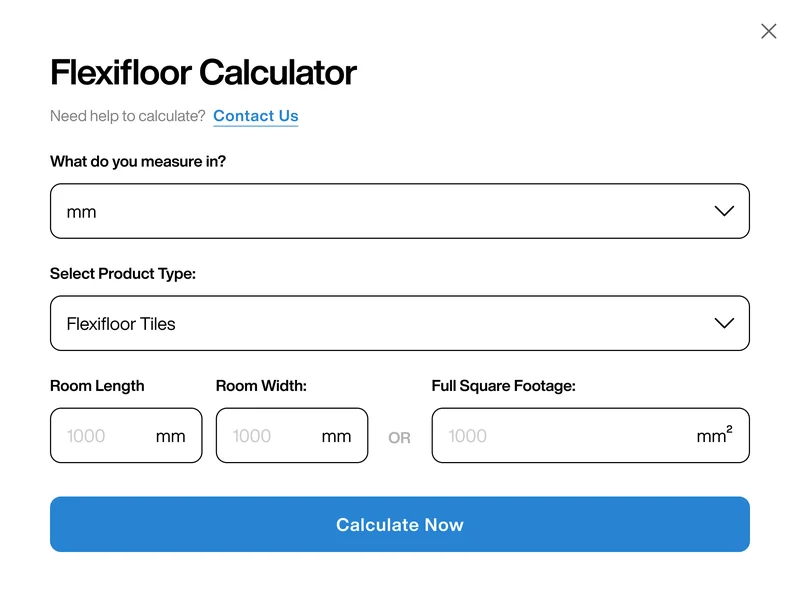
The storefront was built around coverage rather than units. Pack coverage is stated on the product page, quantity is selected in packs while the interface reports the area those packs will cover, and a calculator converts room length and width into a bundle count before the buyer reaches the cart.
Navigation was restructured by material and finish, so a visitor moves from a material family to a named shade in one gesture with the swatch visible at every level. Specifications, a comparison against traditional flooring, a four-step install sequence, and financing terms were consolidated into one evidence layer, which absorbs the sales conversation the direct-to-consumer model no longer supports.
Shopping a Floor by Shade, Not by SKU
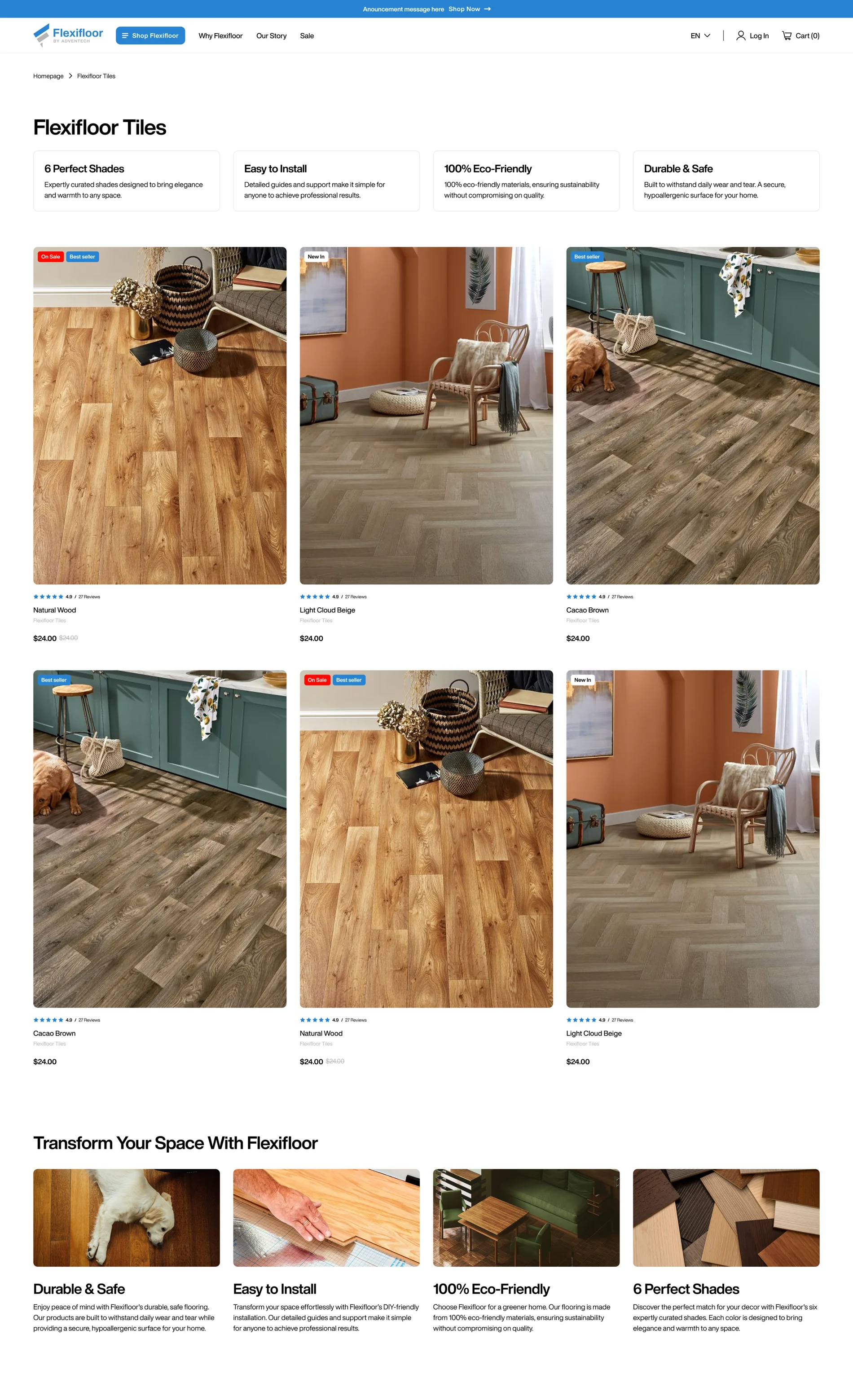
The collection page is a shade board first and a product grid second. Each card carries the finish name, rating, and price, while the four claims that decide the category sit pinned above the grid so they are read once instead of repeated on every tile. Mobile keeps the same hierarchy in a single column, because comparing shades is the entire job of the page.

Material First, Finish Second
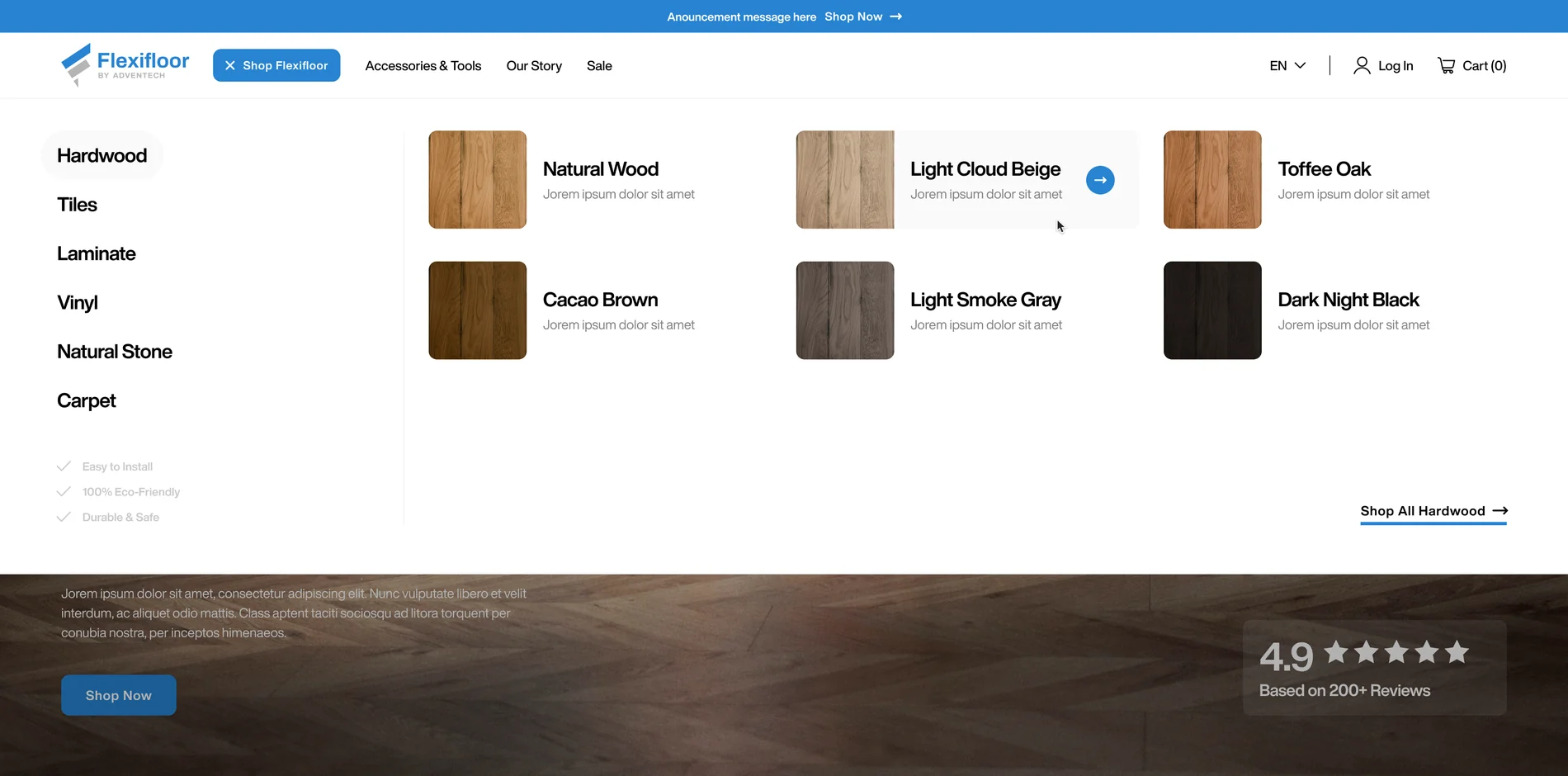
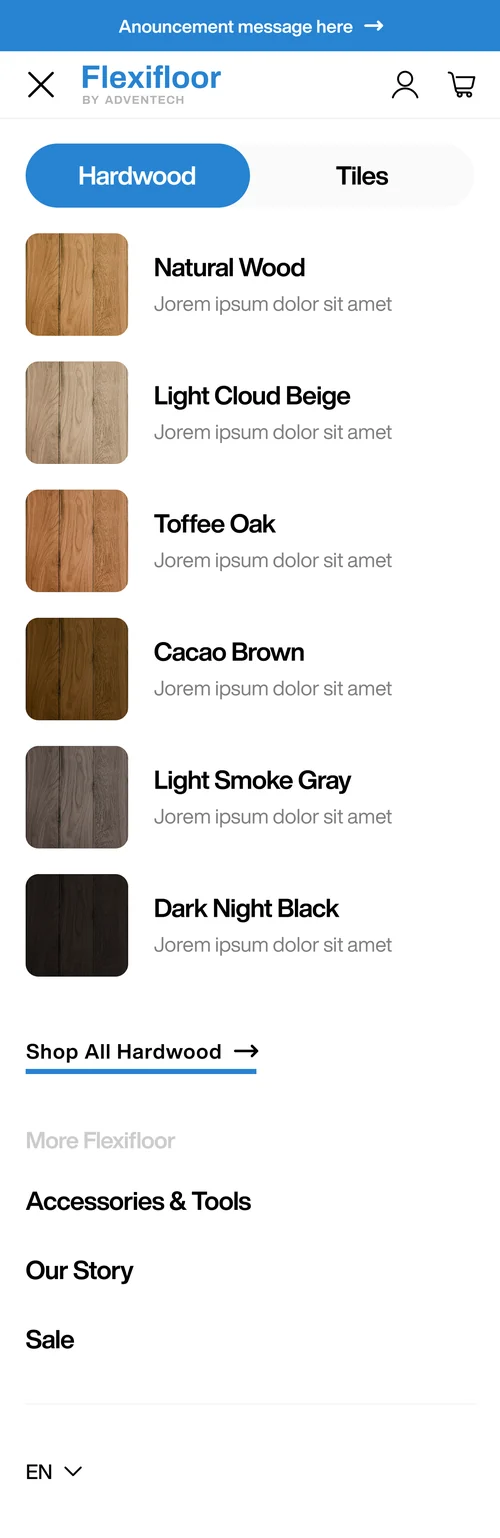
The mega menu is organized by material family, then resolves directly to a named finish with its swatch rendered inline. A buyer who already knows they want dark wood reaches Cacao Brown in two moves without loading an intermediate collection. The mobile menu holds the same two-level structure as a stacked list and keeps the language switcher at its base, so the English and French catalogs stay one tap apart.

Where Packs Become Square Metres
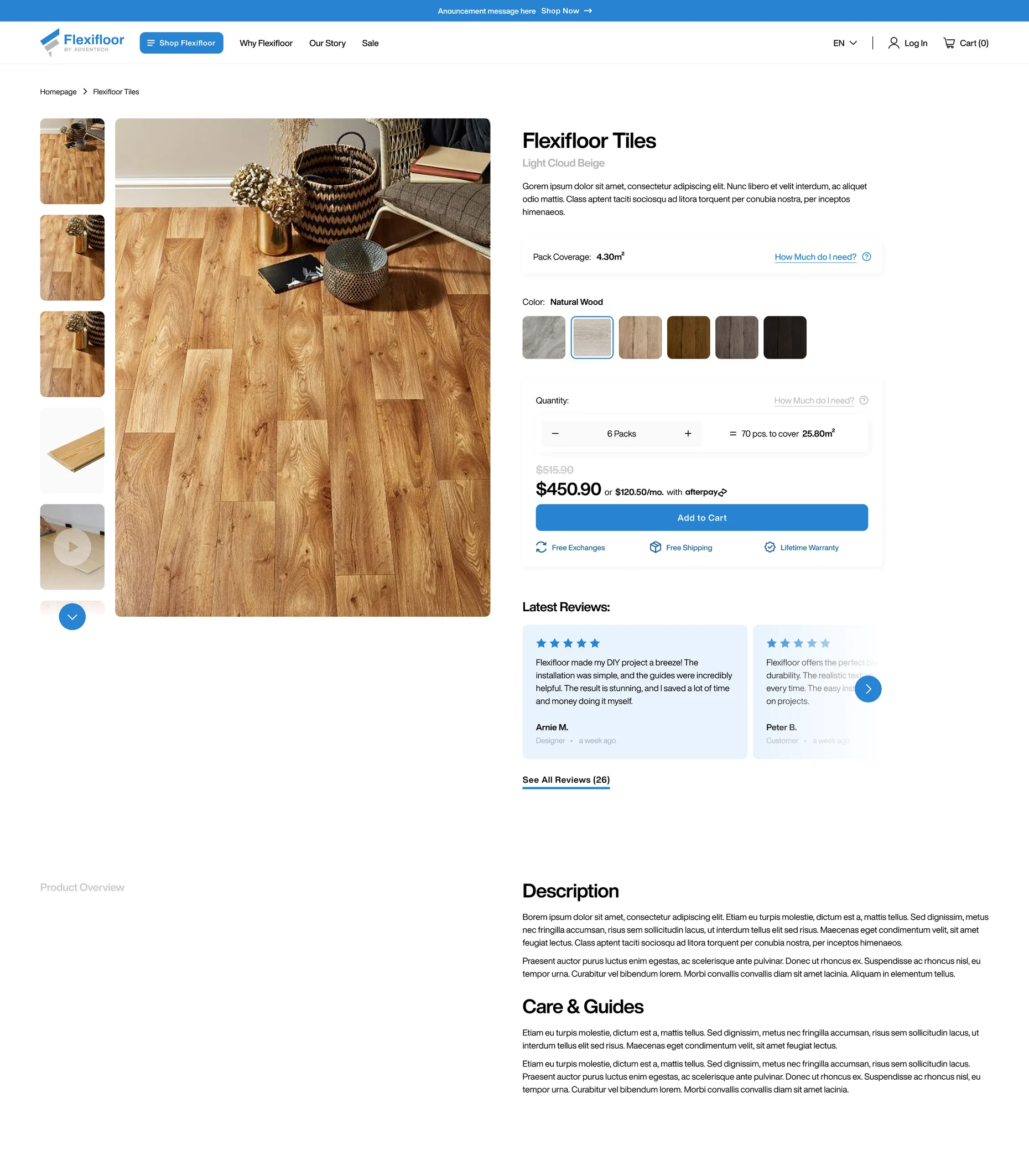
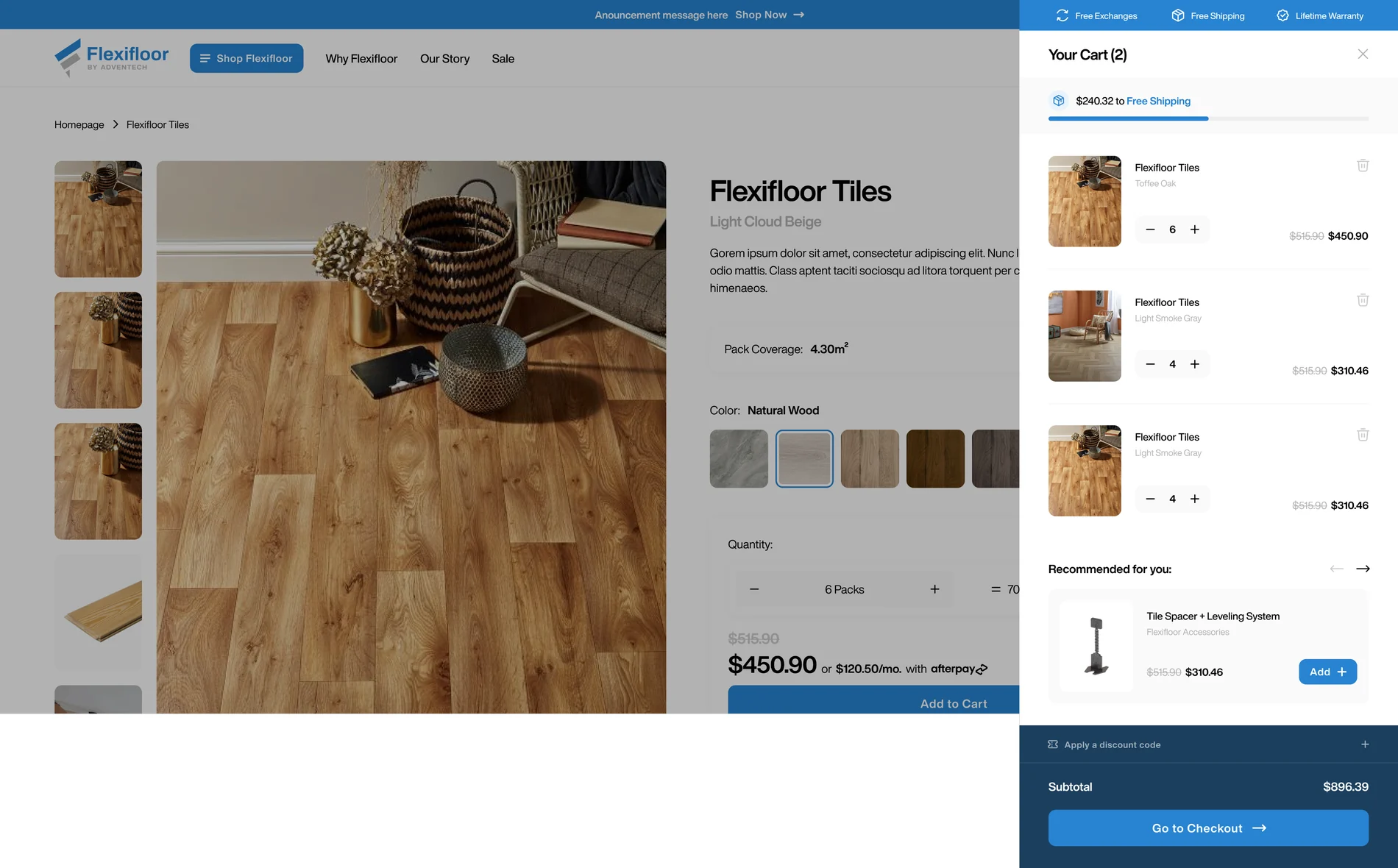
Pack coverage sits directly beneath the title, and the quantity stepper reports the area the current selection covers as it changes. Financing terms, free exchange, shipping, and warranty are held beside the price rather than buried in a footer. The calculator opens in place, takes room length and width, and returns a bundle count, closing the gap between the measurement a buyer took at home and the number of packs they need to order.
A Cart That Protects the Order Quantity
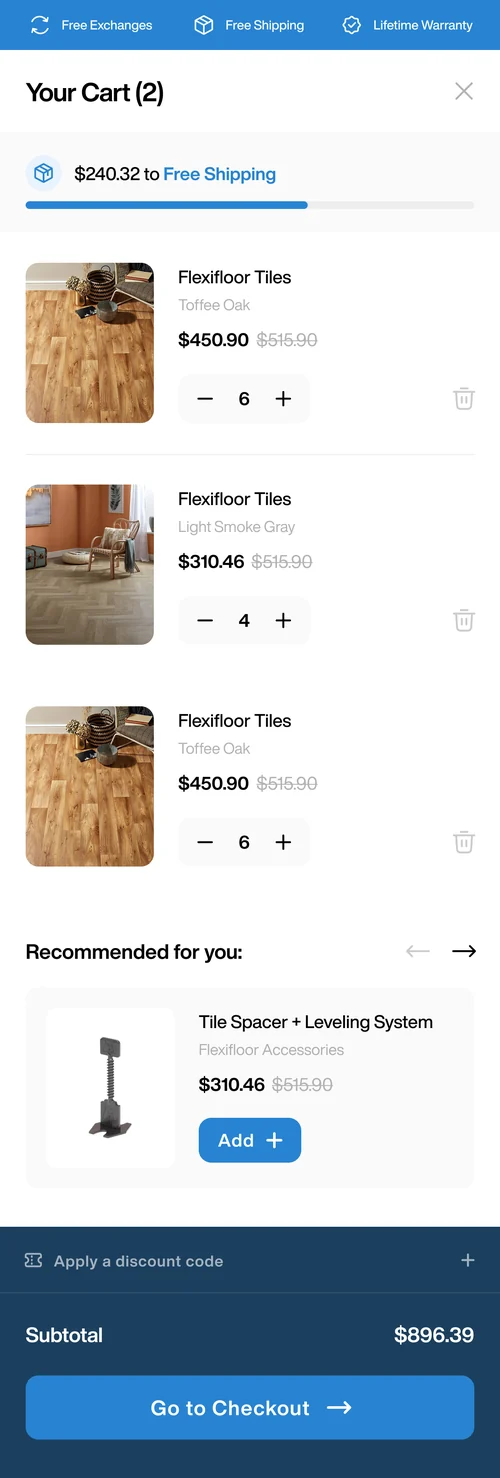
The cart holds pack count and shade on every line, so a buyer verifies coverage before checkout rather than after delivery. A shipping threshold indicator reports the spend remaining to qualify, and the accessory rail surfaces the tile spacer and leveling system: the two items most often forgotten and most likely to compromise an install.
A new vision
The Evidence Layer
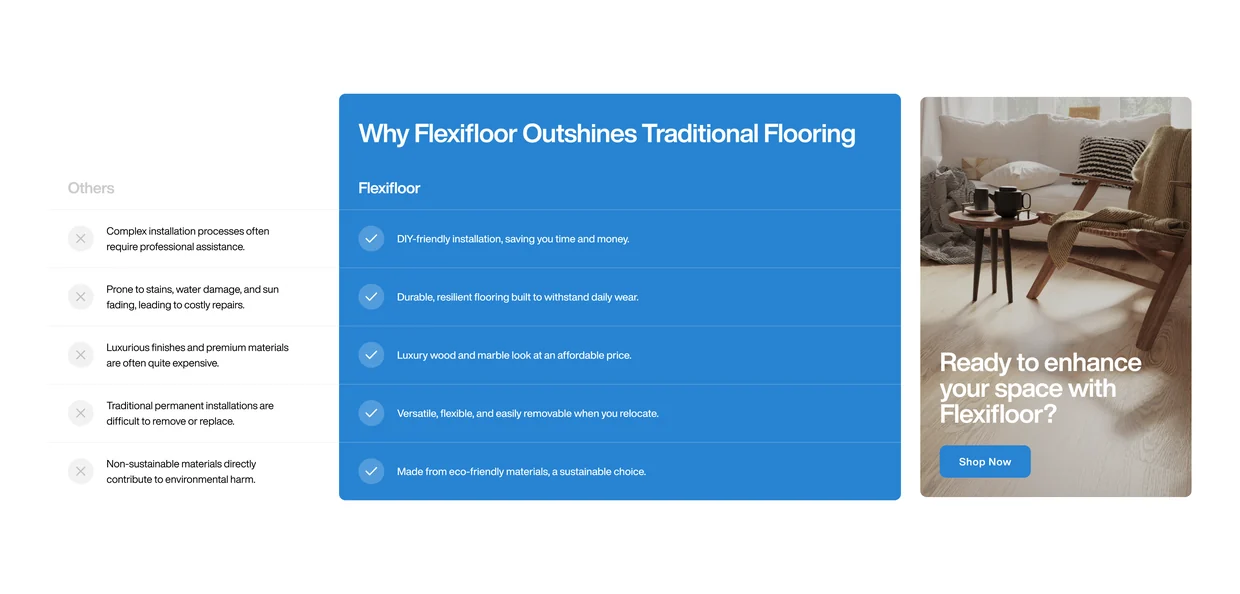
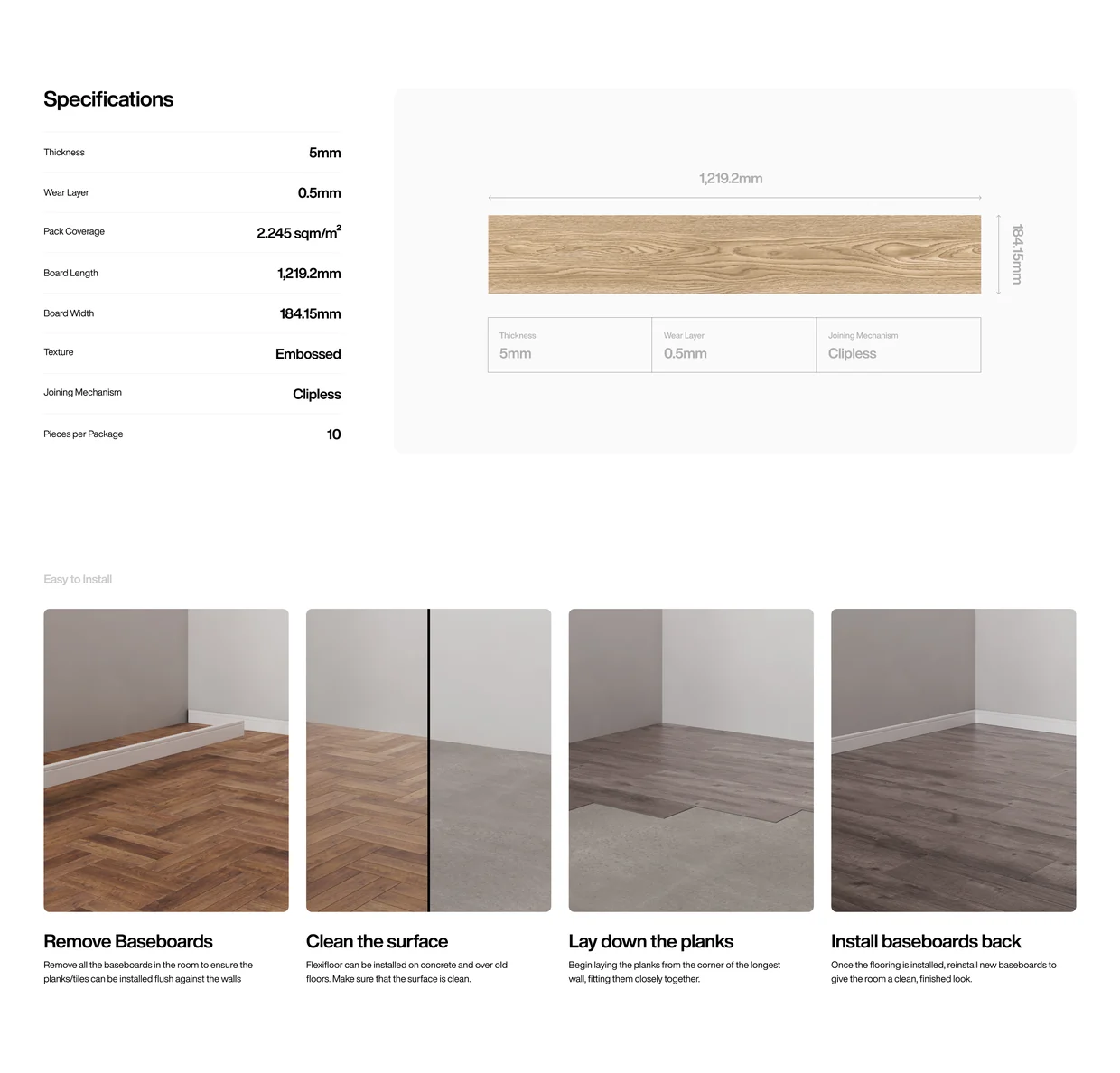
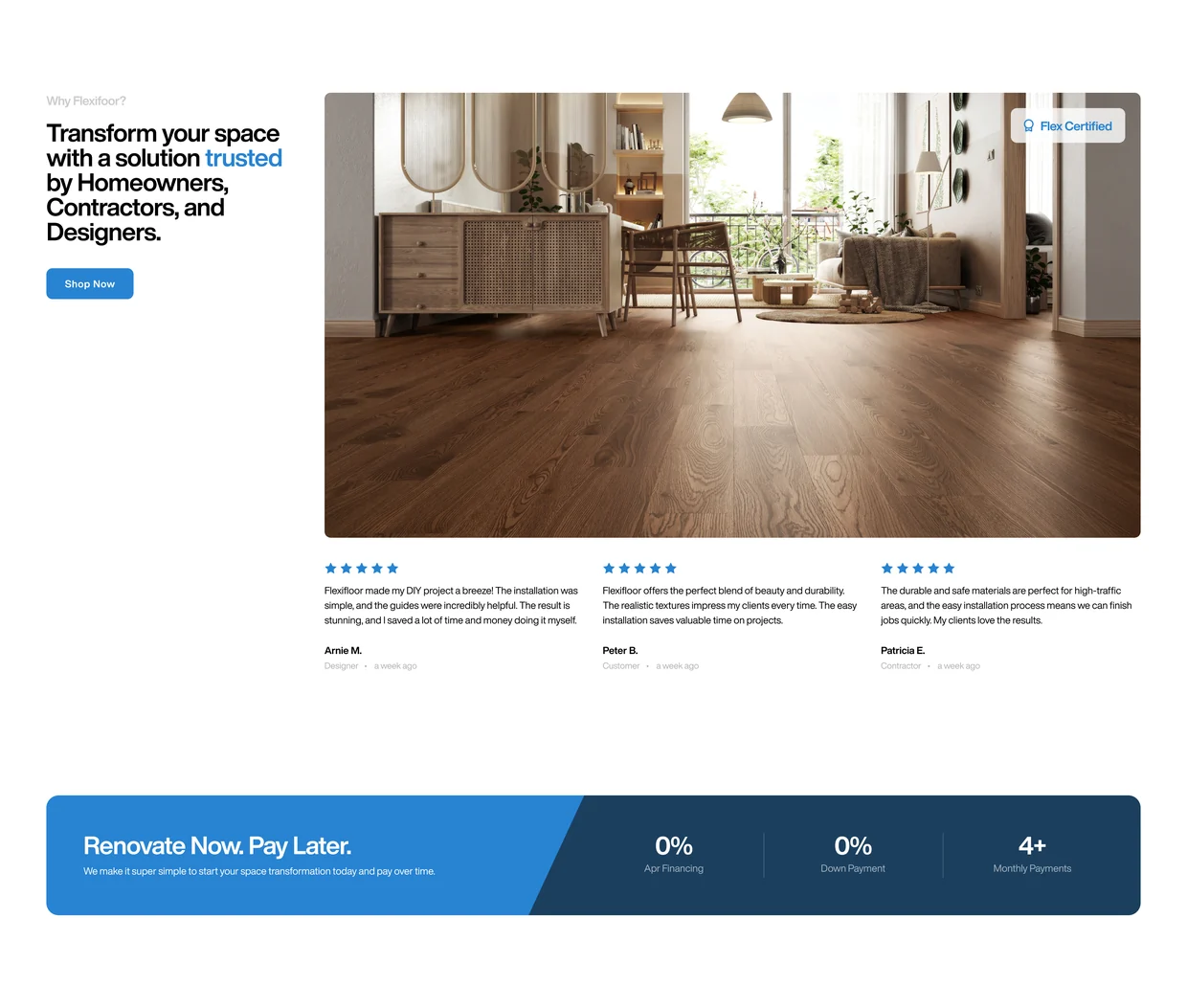
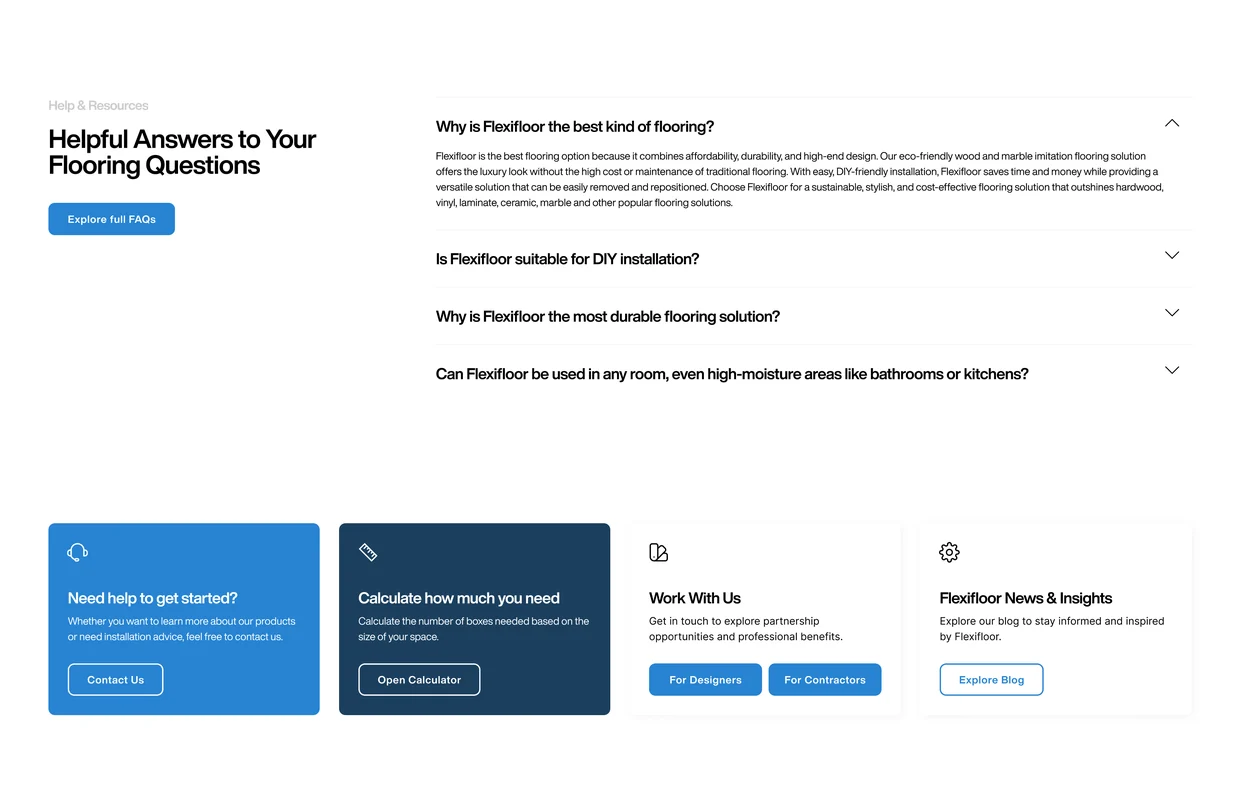
Direct-to-consumer flooring loses orders to uncertainty rather than price. A comparison table sets Flexifloor against traditional flooring on the terms buyers actually raise. A specification table publishes thickness, wear layer, coverage, and joining mechanism with no datasheet download. A four-step sequence shows the whole install, from baseboard removal to baseboard replacement. Financing and the FAQ close what remains, which lets the storefront carry the buyer to checkout on its own.

- Strategy
- Design
- Development
- A/B Testing
- Figma
- Sass
- Webpack
- Shopify